
How Buying Property Works in Costa Rica: A Step-by-Step Guide
Buying a home in Costa Rica is simpler than most people expect, and very different from buying in the US or Canada. Here's the whole process, from your first offer to the day your name is on the title, plus the costs, the checks and the tips that matter if you're coming from the US or Canada.
October 2026 · 11 min read · Guanacaste Starter Series
At a glance
- Who can buy: Foreigners can own titled property outright, with the same rights as citizens. No residency needed.
- Timeline: About 30 to 60 days from accepted offer to closing for a cash purchase.
- Deposit: Typically 10%, held by a regulated escrow company.
- Closing costs: About 3.5% to 4% of the price, often split with the seller.
- Property tax: 0.25% of the registered value per year.
Can foreigners buy property in Costa Rica?
Yes. If the property is titled (fee simple), you can own it in your own name, with the same rights as a Costa Rican citizen. You don't need residency, a local partner or a special permit. A passport and a tourist entry stamp are enough to sign a deed, and your title is recorded at the National Registry (Registro Nacional).
There are two exceptions to know about:
- The Maritime Zone. Under Law 6043, the first 200 meters from the high-tide line aren't titled. The first 50 meters are public beach that no one can own. The next 150 meters are held as municipal concessions, typically for 5 to 20 years, and foreigners with less than five years of residency can't hold a majority of a concession.
- The border strip. A 2-kilometer strip along the national borders is closed to private ownership.
Most homes and condos in Playas del Coco, Ocotal, Playa Hermosa and the hills around them are titled, so these exceptions rarely come up there. Always confirm it for the property you're looking at.
Build your team first
Costa Rica has no multiple listing service (MLS) and no mandatory license for real estate agents. The same home can be listed on several sites at different prices. That makes the people around you more important than ever:
- A local agent who searches the whole market, not just their own listings. Ask about their track record, references you can call, and whether their brokerage is registered with SUGEF, the financial regulator, for anti-money-laundering compliance.
- Your own independent attorney. This is your most important protection. Never use the seller's lawyer as your own. Hire counsel before you sign anything, including the offer.
- A notary. Every Costa Rican notary is also an attorney. The notary drafts the transfer deed and files it with the Registry. Often your attorney is also a notary.
- A SUGEF-registered escrow company to hold your deposit and closing funds.
- A cross-border accountant who knows how your home country taxes foreign property.
The buying process, step by step
- Find the property and agree on a price. Offers below asking are normal. Your written offer covers price, payment terms, timeline and conditions, such as an inspection.
- Sign the purchase agreement and fund escrow. The agreement, often an option to purchase (opción de compraventa), sets the price, deposit, due-diligence period and closing date. The deposit, usually 10%, goes to a SUGEF-registered escrow company. Never wire it directly to a seller or an agent.
- Due diligence, usually 2 to 6 weeks. Your attorney checks the title, survey, permits, water and taxes (see the checklist below). If something fails, you can walk away with your deposit.
- Close before a notary. You sign the transfer deed (escritura), escrow releases the balance to the seller, and the notary files the deed. You can sign in person, or give your attorney a special power of attorney to sign for you.
- Registration. The National Registry records you as the new owner, typically within two to four weeks. Until then, a filing stamp protects your interest. Your attorney then updates the municipality, utilities and any HOA.
The due diligence checklist
Before you commit, your attorney should confirm each of these:
- Title report (informe registral): the seller is the registered owner, and every lien, mortgage, easement and court annotation is explained.
- Registered survey (plano catastrado): it matches the title and the land on the ground. A topographer can check fences and corners.
- Land-use certificate (uso de suelo) from the municipality: allowed uses, density and height limits, especially if you plan to rent.
- Legal access to a public road.
- Water letter (carta de disponibilidad de agua) from AyA or the local ASADA. "No water letter, no building permit." For land, make a current letter a condition of closing.
- Titled, not concession, if the property is near the beach.
- Paid-up taxes and fees: property tax, municipal fees and, for condos, a zero-balance HOA letter plus the bylaws.
- The corporation, if one owns the property: it's active, its taxes are filed, and the person signing has authority to sell.
What it costs to close
Total closing costs run about 3.5% to 4% of the purchase price. Who pays what is negotiable; splitting them 50/50 with the seller is common on the Gold Coast.
| Cost | Typical amount |
|---|---|
| Transfer tax | 1.5% of the sale price or registered value, whichever is higher |
| National Registry stamps | Roughly 0.5% to 0.85% |
| Notary and legal fees | About 1% to 1.5%, plus 13% VAT on the fee |
| Escrow | A few hundred to about a thousand dollars |
| Real estate commission | Paid by the seller |
Example: on a US$300,000 condo, closing costs of 3.5% to 4% come to about US$10,500 to US$12,000 in total, before any split with the seller.
What it costs to own
- Property tax: 0.25% of the registered value each year. On a home registered at US$300,000, that's about US$750 a year.
- Luxury home (solidarity) tax: applies only when construction value exceeds ¢143 million for 2026 (adjusted yearly), at progressive rates starting at 0.25%. It's filed and paid by January 15.
- HOA dues for condos and gated communities.
- Utilities: usually less than people expect. Air conditioning is the biggest cost in a coastal home.
- Corporation tax of a few hundred dollars a year, if you own through a company.
For Americans: US tax reporting
- There is no income tax treaty between the US and Costa Rica, so the foreign tax credit is your main protection against double tax.
- Owning the property by itself isn't reportable. Rental income goes on Schedule E, and Costa Rican tax paid on it is generally creditable.
- If Costa Rican bank accounts push your foreign accounts over US$10,000 at any point in the year, file an FBAR. Larger holdings may also need Form 8938.
- Owning through a Costa Rican corporation usually means filing Form 5471 every year. Talk to a US CPA before you choose that route.
For Canadians: CRA reporting
- File Form T1135 if the total cost of your foreign property tops CAD$100,000 at any time in the year. A home used only personally is exempt, but renting it, even part of the year, makes it count.
- Rental income is taxed in Costa Rica first, generally at an effective 12.75% of gross. Claim it as a foreign tax credit on your Canadian return.
- Canada taxes your gain in Canadian dollars when you sell, so a weaker loonie at sale can create a Canadian gain even if the US-dollar price didn't rise.
- A Costa Rican corporation you control is a foreign affiliate that needs T1134 reporting. Decide with a cross-border accountant before closing.
Paying for it: cash, seller financing or a loan
Most foreign buyers pay cash, and sellers value a clean 30- to 60-day closing. If you need financing, you have options:
- Seller financing: common on the Gold Coast. Expect 25% to 50% down, about 6% to 9% interest and 1 to 3 years, often interest-only with a balloon payment, secured by a registered mortgage or a guarantee trust.
- Costa Rican banks: available to non-residents, but slow. Expect 30% to 50% down, US-dollar rates of roughly 7% to 10%, 15- to 20-year terms and 3 to 6 months for approval, with two years of tax returns and translated documents.
- Equity from home: a home-equity line or cash-out refinance on your US or Canadian home lets you buy in cash here, at home-country rates. The risk is borrowing against your main home.
Whichever you choose, funds move by wire through escrow, and you'll need to document where the money came from. Allow about a week for international wires, and always confirm wire instructions by phone, never by email alone.
For Americans: paying and flying in
- Prices on the coast are in US dollars, so there's no currency risk on the purchase price.
- Some buyers fund a purchase with a self-directed IRA or 401(k), but only for pure investment property. Get advice before you try it.
- Liberia's airport (LIR) has direct flights from more than a dozen US cities, and it's 25 to 30 minutes from Playas del Coco.
For Canadians: the loonie matters
- Coastal real estate is priced and paid in US dollars. A 10% move in the loonie changes the real cost of a US$300,000 condo by about CAD$40,000.
- A currency broker or specialist FX service can save you 1% to 2% versus your bank on a six-figure transfer. A forward contract can lock today's rate if you plan to buy within a year.
- Rental income in US dollars can act as a partial hedge against a weak loonie.
Your name or a corporation?
Buying through a Costa Rican corporation (an S.A. or S.R.L.) used to be the default. Today corporations carry annual shareholder disclosures and an annual tax, and both the IRS and CRA treat a company you control as reportable. Many buyers now hold property in their own name, with a Costa Rican will so their heirs avoid slow probate, and keep corporations for rentals or shared purchases. Decide with your attorney and accountant, before closing.
Owning doesn't mean residency (but it can lead there)
You can own property and visit as a tourist, generally for up to 180 days per entry for US and Canadian citizens. If you want to live here, the main residency paths are:
- Investor (inversionista): at least US$150,000 invested in Costa Rican real estate.
- Retiree (pensionado): at least US$1,000 a month in pension income.
- Rentista: at least US$2,500 a month in other stable income.
Residency gives you access to the public health system (the CAJA) and ends the need to leave every few months. Thresholds change, so confirm current rules with an immigration attorney.
For Canadians: health cover and snowbirding
- Provincial health coverage depends on time in your province. Ontario and Alberta, for example, require 183 days a year. Check your province's rules before planning long winters away.
- CPP and OAS count toward the US$1,000-a-month pensionado residency.
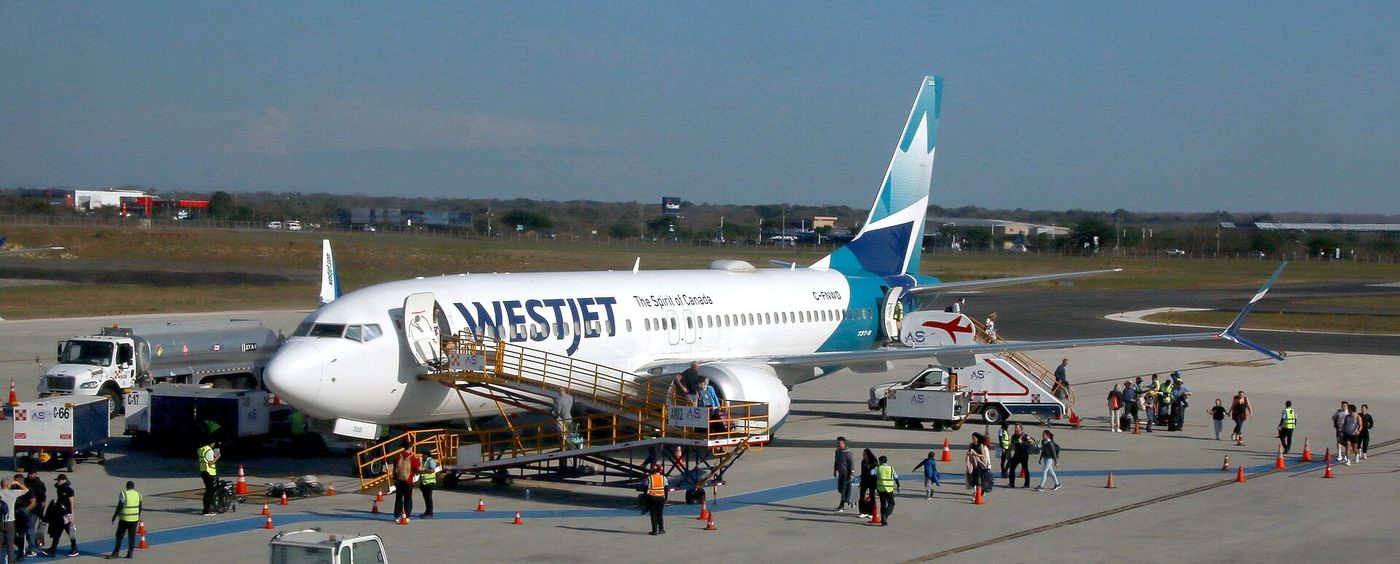
- Direct seasonal flights to Liberia run from Toronto (Air Canada, WestJet), Montreal (Air Canada, Air Transat) and Calgary (WestJet). Toronto is about 5 to 6 hours.
- Becoming a non-resident of Canada for tax purposes is a separate decision with departure-tax consequences. Most owners stay Canadian tax residents and winter here.
For Americans: health and Medicare
- Medicare generally doesn't cover care received outside the US, so plan for private insurance or residency and the CAJA while you're here.
- US Social Security counts as pension income for the pensionado residency.
- If you sell, Costa Rica charges 15% capital gains tax on real estate, with an exemption for your habitual residence. The US also taxes the gain, generally with a credit for tax paid here.
Mistakes to avoid
- Wiring money outside escrow or directly to a seller.
- Using the seller's lawyer instead of your own.
- Assuming beachfront is titled when it's concession land.
- Buying land without a current water letter. Letters often expire in 6 to 12 months.
- Trusting one listing price without checking the wider market.
- Choosing a corporation without your accountant's input.
- Walking away after closing. Empty, unfenced land attracts squatters. Turn on the Registry's alert service, fence the land, pay your taxes and visit, or have someone check on it.
Are you starting to look, or already have a property in mind? Send me your questions on WhatsApp. I'll walk you through every step, from the first showing to the day you get your keys.
Ready to start looking? Browse current listings at Expat Properties.
— Emey Kolb
This guide is general information, not legal, tax or immigration advice. Figures change; confirm them with a licensed Costa Rican attorney and your accountant before you act.
Sources
- Expat Properties | CR, Buying Property in Costa Rica as an American (Sept 2026)
- Expat Properties | CR, Buying Costa Rica Real Estate from Canada (Sept 2026)
- Expat Properties | CR, How to Buy a Home in Costa Rica
- Expat Properties | CR, Due Diligence: The 9 Checks Before You Sign (Sept 2026)
- Expat Properties | CR, 7 Costly Mistakes Foreign Buyers Make
- Expat Properties | CR, Financing a Costa Rica Home
- Luxury home tax threshold for 2026: El Observador, Impuesto a casas de lujo: montos 2026
- FBAR: IRS, Report of Foreign Bank and Financial Accounts
- T1135: CRA, Questions and answers about Form T1135
- Medicare outside the US: Medicare.gov, Travel outside the U.S.